Online dating and peer to peer marketplaces have become part of everyday life. Whether you are meeting a potential partner on Tinder or buying a laptop from Facebook Marketplace, trust is built fast and often with very little information. That speed is exactly what scammers rely on. Learning how to verify a dating profile or run a basic background check on an online match is no longer paranoia. It is digital self defense.
This guide takes a lifestyle focused and ethical OSINT approach. OSINT means open source intelligence, using publicly available information to check consistency and credibility. You are not hacking, spying, or crossing legal lines. You are simply checking what is already public to protect yourself from scams, fake identities, and emotional or financial harm.
1. The Catfish Reality
Romance scams are not a niche problem anymore. They are one of the fastest growing forms of online fraud. According to recent data shared by Match Group, the parent company of Tinder and Hinge, impersonation and romance scams continue to rise as scammers use AI generated photos and scripted conversations to scale their operations.
Research from McAfee (2025) indicates that 1 in 4 people have now been approached by an AI chatbot posing as a real person on a dating app, making it nearly impossible to detect fake profiles through text-based “turing tests” alone.
Match Group highlights that fake profiles often operate across multiple platforms, targeting both dating apps and marketplaces at the same time.
The most common risks include:
- Romance scams that slowly build emotional trust before asking for money or favors
- Marketplace scams involving fake sellers or buyers who disappear after payment
- Identity harvesting where personal details are collected and reused elsewhere
- Catfishing using stolen or AI generated photos
Understanding these risks makes it clear why verifying a profile before emotional or financial investment matters.
2. The Pre Date Checklist: A 5 Minute Safety Search
You do not need advanced tools or hours of research to verify a dating app match. A simple five minute routine can reveal inconsistencies early.
Step one: Save the basics
Before you start, note down what is visible:
- First name or nickname
- Age and stated location
- Profile photos
- Any username or handle shown in bio
Step two: Google smartly
Search combinations like:
- First name + city + job title
- Username in quotes
- Email address if they shared one
If you only have a real name and limited profile details, a reverse approach can still work. This article on finding social accounts by real name explains how to connect fragments of public information ethically.
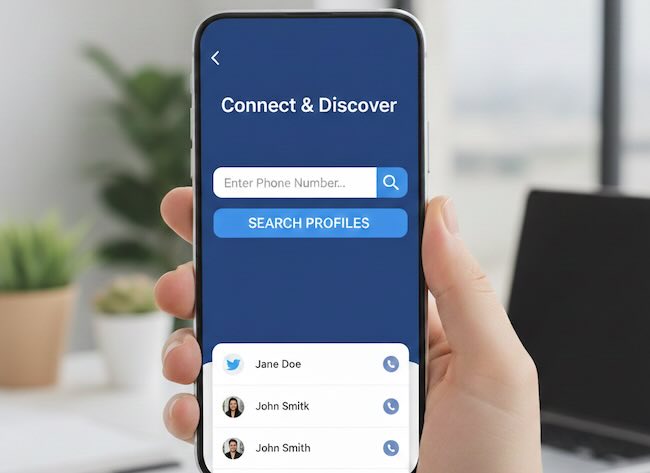
Alternatively, you may use Free social media profiles finder tool, which speeds up the process.
Even a single consistent public profile can increase confidence. Complete silence across the social media and web is not proof of a scam, but it raises questions if combined with other red flags.
3. Reverse Image Searching Tinder Photos
Photos are the most abused asset in fake profiles. Scammers often steal images from influencers, stock photo sites, or private social media accounts.
How to run a reverse image check
Save one or two profile photos and upload them to tools like Google Images or Bing Visual Search. You are looking for:
- The same photo used under a different name
- Appearance on stock photo libraries
- Profiles in different countries using identical images
If the image appears on a stock site or under multiple identities, that is a strong signal of a fake profile.
A real person may have limited online presence. A fake profile often has recycled images everywhere.
4. Username Recycling Across Social Networks
One of the most effective OSINT techniques is username searching. Many people reuse the same handle across platforms for convenience or branding.
When an exact username does not return results, it does not mean the profile does not exist. Many users slightly modify their handles across platforms. This guide on username variations and how to guess someone’s handle explains common patterns that help uncover linked accounts.
Tinder
Tinder is the most transparent regarding usernames, though they are optional.
- Username Logic: Tinder uses “Handles” (e.g., @username). These are unique across the global platform. If a user hasn’t set a handle, their identifier is a hidden internal ID.
- Navigation & Location: 1. Tap the Profile Icon (bottom right). 2. Tap the Settings Gear (top right). 3. Scroll to the Username section.
- How to Copy URL: If they have a handle, the URL format is tinder.com/@username. To share or copy a profile you are currently viewing: Open the profile > Scroll to the bottom > Tap “Share [Name]‘s Profile.” This generates a temporary, trackable URL.
Hinge
Hinge does not use public-facing usernames. It relies on “Vitals” and unique shareable tokens. Username Logic: Hinge identifies users via their First Name + Phone Number/Facebook ID on the backend. There is no @handle for users to customize.
Bumble
Bumble uses a combination of first names and a hidden “Bumble ID” for customer support and internal tracking. Username Logic: No public usernames. Like Hinge, it is name-based. However, every account has a permanent Numeric User ID.
Extracting usernames from apps
Examples you might see in bios:
- “Add me on snap: mike_berlin”
- “Not active here, IG anna.fitlife”
- “Telegram @crypto_john”
Copy the handle exactly as written and search it directly. If you find consistent photos, friends, and posting history over time, that supports legitimacy. If the account was created last week with no real interactions, caution is advised.
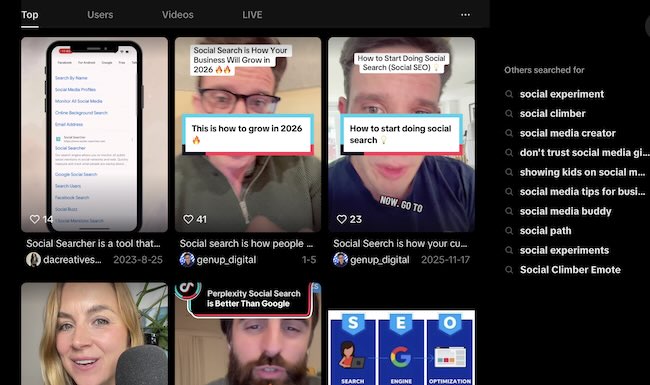
Advanced tools like social media search engines can speed this up by scanning multiple platforms at once, helping verify profiles without manual repetition.
5. Major Red Flags You Should Not Ignore
Even if some information checks out, behavior matters just as much as data.
Refusal to video chat
Consistent excuses for avoiding live video calls are one of the strongest warning signs. Technical issues happen once. They do not happen every time.
Location inconsistencies
If someone claims to live in Berlin but all their posts are tagged in another country, ask why. Travel is normal. Permanent mismatch is not.
Fast emotional escalation
Statements like “I have never felt this connection” within days are common manipulation tactics.
Pressure involving money or urgency
Requests for help with investments, crypto, gift cards, or emergency payments are a clear signal to disengage immediately.
6. Ethical Boundary: Vetting vs Stalking
There is a clear ethical and legal line between verifying a profile and invading someone’s privacy.
Ethical verification means:
- Using only publicly available information
- Not creating fake accounts to access private data
- Not contacting friends or family without consent
- Stopping once credibility is reasonably established
You are checking consistency, not digging for secrets. If you feel the need to cross private boundaries to feel safe, that is a signal to step back entirely.
7. Practical Safety Checklist
- Verify photos with reverse image search
- Search usernames across major social networks
- Confirm location consistency over time
- Insist on a short video call before meeting or paying
- Never send money or financial details to someone you have not met
- Trust discomfort even if you cannot fully explain it
Verification is not about suspicion. It is about informed trust.
8. Frequently Asked Questions
Is it legal to verify a dating profile online?
Yes, as long as you only use publicly available information and do not attempt to access private accounts or data without permission.
What if I cannot find anything about them online?
Some people value privacy. Lack of data alone is not proof of a scam. Combine it with behavioral red flags before deciding.
Are background check tools reliable for dating?
They can help with username and profile discovery, but they should not replace direct communication and common sense.
Should I confront someone if I find inconsistencies?
You can ask neutral questions, but you are not obligated to confront. Walking away quietly is often the safest option.
Can scammers have real looking social profiles?
Yes. Some scams involve long term aged accounts or stolen identities. That is why multiple checks and behavior analysis matter.
In a world where first impressions are digital, learning how to verify a dating profile or marketplace seller is a life skill. Ethical OSINT gives you clarity without crossing boundaries, helping you connect with confidence instead of fear.