How to Find Old or Deleted Social Media Accounts

Find Old or Deleted Social Media Accounts

Most people assume that when a social media profile disappears, it is gone forever. The username no longer opens. The posts no longer load. The trail appears to end. In reality, the internet rarely forgets. Profiles are removed, suspended, or abandoned every day, but traces of them often remain scattered across search engines, archives, data aggregators, and third-party services.

Learning how to find old or deleted social media accounts is not about invading privacy or accessing anything hidden. It is about understanding how public data persists, how platforms distribute information, and how historical traces can still be located long after a profile stops being active.

This guide focuses specifically on historical and archival discovery. Not how to find active users. Not how to detect fake profiles. But how to surface what existed before. Old usernames. Deleted bios. Past posts. Traces of accounts that once shaped someone’s public digital footprint.

Read more

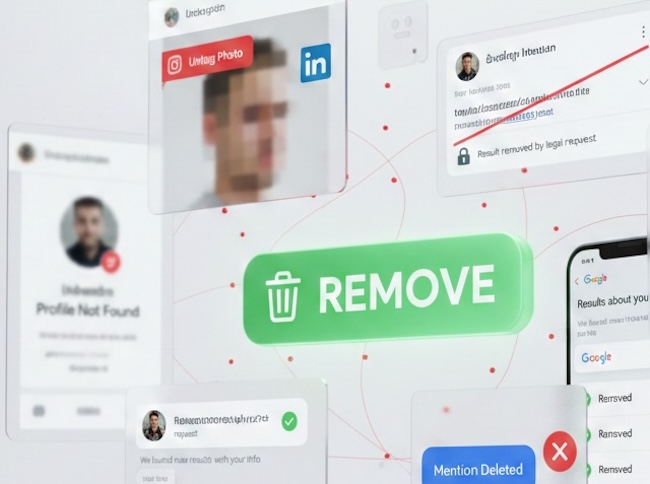
How to Remove Yourself from Social Media Mentions and Public Search Results

Remove Yourself from Social Media Mentions and Public Search Results

Most people think online visibility is about profiles. In reality, it is about mentions.

Your name, image, username, or contact details appear online because they are referenced, copied, indexed, and republished across platforms. Social networks, websites, directories, news articles, and people search databases all contribute to whether someone can find you.

When personal information shows up in search results, it is rarely because of a single post. It is usually because many systems have detected, stored, and redistributed that reference.

If you want to understand how names and identities are discovered in the first place, start with our complete guide to user search across social platforms

Read more

Visual OSINT 2026: The Master Guide to Finding People by Photo

Finding People by Photo 2026

Text-based identity search is breaking down.

Names collide. Usernames rotate. Bios are rewritten. Handles are abandoned. But images persist.

A profile photo uploaded once can resurface years later on forums, corporate sites, archived pages, data brokers, and repost networks. Even when an account is deleted, its images often continue to travel. They are cached, resized, embedded, scraped, and redistributed across the public web.

This shift has changed how people search works. Discovery no longer begins with what someone writes about themselves. It begins with what they look like, what surrounds them, and where their images appear.

Visual OSINT, or open source intelligence based on images, reflects this reality. It combines reverse image search, computer vision, and contextual interpretation to move from a single photo to a broader understanding of an online identity.

This master guide brings together two dimensions of modern visual investigation. First, the practical workflow for finding where a photo appears and how it connects to profiles. Second, the advanced layer of AI-driven visual intelligence, including facial correlation, environmental analysis, and synthetic identity detection.

Read more

Is Social Media Search Legal? Understanding Public vs. Private Data

Understanding Public vs. Private Data

Every week, founders, marketers, journalists, and investigators ask the same question: “Is social media search legal?” Behind this simple sentence lies a complex mix of privacy law, platform rules, ethical responsibility, and technical misunderstanding. Many people associate social media searching with hacking, spying, or unlawful surveillance. In reality, there is a critical legal and ethical difference between breaking into accounts and indexing information that users have chosen to make public.

The purpose of the article is purely educational and trust building. It explains where the legal boundaries are, what “open source intelligence” actually means, how social media data privacy laws apply across regions, and why the phrase “If Google can see it, you can search it” is a useful starting point for understanding compliance.

By the end, you should have a clear framework to distinguish lawful OSINT activity from illegal data access, to understand how regulations like GDPR shape social media search, and to evaluate tools and processes with confidence.

Read more

The Brand Audit: How to Check Username Availability Across Social Networks

Digital Footprint

For marketers and startup founders, a brand is not only a logo or a product. It is digital territory. A structured process to check username availability for brand use across platforms helps define and defend that territory. Every social profile, community platform, forum and content network represents a plot of land where your brand can either grow or be exploited by someone else. Before campaigns, before growth hacks, even before your first big press mention, there is a fundamental step that often gets skipped: the brand handle audit.

This process is not about finding people. It is not about curiosity searches. It is about competitive intelligence, brand protection and long term visibility. A proper audit helps you check username availability for brand use, understand where your name already exists and define how your identity will look across the social web.

In this guide, we will walk through why consistent handles matter, how social usernames impact SEO, how to run a structured brand handle audit and what to do if your ideal username is already taken.

Read more

Recruitment 101: A Guide to Social Media Background Checks

Social Media Background Checks

Social media has transformed how people communicate, share opinions, and build professional identities. For HR professionals, this shift has introduced a new dimension to recruitment. Public online profiles can offer valuable context about candidates, but they also create ethical, legal, and professional risks if handled incorrectly.

This guide is designed for HR leaders, recruiters, and hiring managers who want to approach social media screening for employers in a structured, compliant, and fair way. Rather than focusing on how to “find dirt,” the emphasis here is on ethical background checks, compliance, and professional hiring frameworks that protect both the organization and the candidate.

When done properly, HR social media screening can support safer hiring decisions, reduce reputational risk, and improve culture alignment. When done poorly, it can introduce bias, violate privacy laws, and expose companies to serious legal consequences.

Read more

Digital Footprint: How Much of You Is Public?

Digital Footprint

Every time you create an account, post a comment, sign up for a newsletter, or appear in someone else’s photo, you leave a trace behind. Together, these traces form your digital footprint. Many people assume their online presence is limited to what they actively share on social media. In reality, your footprint is often larger, older, and more public than you expect.

This article focuses on self-awareness and privacy. It is not about spying on others. It is about understanding what information about you is publicly available, why that matters, and how to take control of it. A regular digital footprint search is a form of self-defense in a world where data spreads faster than memory fades.

Read more

How to Detect Fake or Impersonation Profiles

How to Detect Fake or Impersonation Profiles

Fake and impersonation profiles have become a daily risk for individuals, brands, executives, and communities. Social platforms are more crowded than ever, and trust is often built in seconds based on a profile photo, username, or short bio. Unfortunately, this speed is exactly what scammers and impersonators exploit.

This guide explains how to detect fake profiles using profile consistency analysis. The methods described here apply to any social network and focus on practical verification rather than platform-specific tricks. If your goal is to verify a social media account or identify fake social media accounts before damage is done, this article will give you a clear and structured approach.

Read more

How to Verify Someone from Dating or Marketplace Apps

Verify Someone from Dating or Marketplace Apps

Online dating and peer to peer marketplaces have become part of everyday life. Whether you are meeting a potential partner on Tinder or buying a laptop from Facebook Marketplace, trust is built fast and often with very little information. That speed is exactly what scammers rely on. Learning how to verify a dating profile or run a basic background check on an online match is no longer paranoia. It is digital self defense.

This guide takes a lifestyle focused and ethical OSINT approach. OSINT means open source intelligence, using publicly available information to check consistency and credibility. You are not hacking, spying, or crossing legal lines. You are simply checking what is already public to protect yourself from scams, fake identities, and emotional or financial harm.

Read more

Why You Cannot Find Some Profiles Online

Google Search Operators for OSINT

Almost everyone has experienced it. You type a name into Google, Facebook, LinkedIn, or Instagram and nothing useful comes up. No profile. No trace. It can feel confusing, frustrating, or even suspicious. If you can’t find a person on social media or you can’t find someone online at all, the reason is usually far more ordinary than people expect.

This article breaks down the most common reasons behind missing profiles search issues and expands on the concepts covered in our complete guide to searching for people online. It is written as a practical troubleshooting guide and FAQ style resource to support deeper user search research. Instead of assuming someone has disappeared, you will learn how social platforms, privacy tools, and technical limitations shape what you can and cannot see.

Read more